
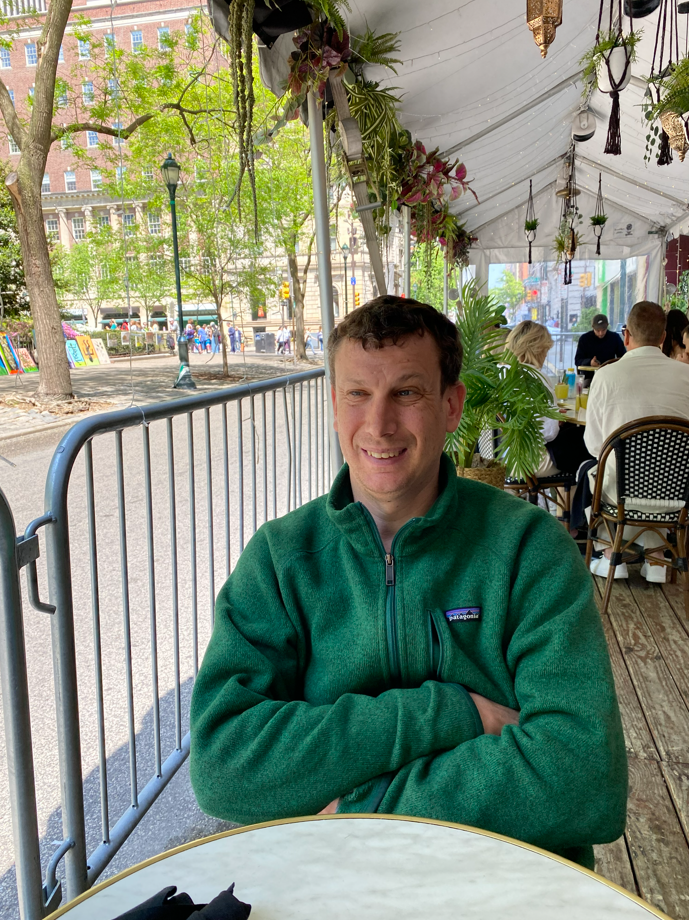
When Tanezia Harden first met Jared Berns in August 2025, he was in crisis.
The Atlantic County resident, who has a mild intellectual disability, ADHD, and generalized anxiety disorder, was experiencing severe anxiety and emotional dysregulation. His mother, Kathleen Berns, was doing everything she could to support him, but after years of navigating complex challenges largely on her own, she felt overwhelmed.
Today, Jared's life looks very different. He volunteers throughout his community and spends time doing what he loves most: helping others.
For Kathleen Berns, the change has been remarkable.
"For the first time, I wasn't alone," she said. "I had a team."
That team came through NJ START, New Jersey's crisis prevention and intervention program for people with intellectual and developmental disabilities and co-occurring behavioral health needs. Since launching as a pilot program in 2025, NJ START has helped people and families strengthen support systems that promote stability, independence, and community inclusion while preventing unnecessary hospitalizations, law enforcement involvement, and disruptions to daily life.
For Jared, that support came at a critical time.
Jared's challenges were deeply rooted in trauma. Before moving to New Jersey to live with his mother, he spent 11 years in approximately 10 group homes where he experienced abuse and repeated disruptions to his support system.
When Harden, a clinical coordinator with NJ START, began working with him, she focused first on building trust.
"We would go on walks and talk," she said. "I wanted to understand what he liked, how he felt, and how he viewed what was happening around him."
Those conversations laid the foundation for a meaningful relationship.
Within weeks, Berns noticed a difference.
"When he was feeling anxious or unsafe, he would ask for Tanezia," she said. "He's had therapists and counselors before, but he never asked for them by name. That's when I knew the connection was real."
While supporting Jared was important, NJ START's work extended beyond the person.
Harden collaborated with Berns, support staff, psychiatrist, support coordinator, and day program team to ensure everyone was working toward the same goals.
"What are we seeing at home? What are we seeing at the day program? What are we seeing in the community?" Harden said. "Let's bring everyone together and create one plan that supports the person."
For Berns, it was the first time she felt all of Jared's supports were truly connected.
"For the first time in Jared's 41 years, we had a legitimate team," she said.
A core part of NJ START's approach is identifying what matters most to the person receiving support.
For Jared, that's giving back.
He volunteers at a farm that cares for animals with disabilities, participates in community-based work experiences through his day program, and takes pride in helping his neighborhood. He's also an active member of a local baseball team.
"He loves volunteering. He loves animals. He loves helping people," Harden said. "Giving back is what brings him joy."
By building supports around those interests and helping his team better understand his triggers, communication style, and needs, Jared has been able to develop new coping skills and maintain greater stability.
Today, Jared is thriving.
His aggressive behaviors have significantly decreased, his anxiety is more manageable, and he continues to gain confidence and independence.
The team is now focused on helping him prepare for the future, including exploring respite services, strengthening community connections, and identifying additional opportunities for independence.
For Harden, watching Jared's growth has been one of the most rewarding parts of her work.
"I tell him all the time how proud I am of him," she said. "He's worked really hard."
For Berns, the goal is not perfection. It's healing.
"My greatest hope is that he continues to work through his trauma," she said. "That he learns to recognize his anger and manage it when it comes."