

On a Sunday morning in Farmingdale, Long Island, 68-year-old Howard Sturm laces up his shoes and heads to his bowling league, a routine he’s kept for more than 40 years. It’s a life built on choice and community.
But his story begins in a very different place.
At just 10 years old, after time in foster care, he was placed in the now-closed Wassaic State School, where he lived from 1968 to 1976.
“It was not a good place,” Sturm said. “I would never want to go back there.”
He recalled an environment defined by fear and mistreatment. “Staff would hit people,” Sturm said. “I remember being struck on the head so hard I felt like I was close to losing my memory.”
For much of the 20th century, institutions like Wassaic were the default for people with intellectual and developmental disabilities (I/DD), often separating people from their communities, their autonomy, and their futures.
When he left Wassaic at age 18 and joined YAI in 1976, he stepped into a system that was just beginning to change. Over the decades, that change has been profound.
In 1987, nearly 90% of people receiving Medicaid-funded supports lived in institutions. Today, that number has flipped—nearly 90% now receive supports in the community, according to the Administration for Community Living.
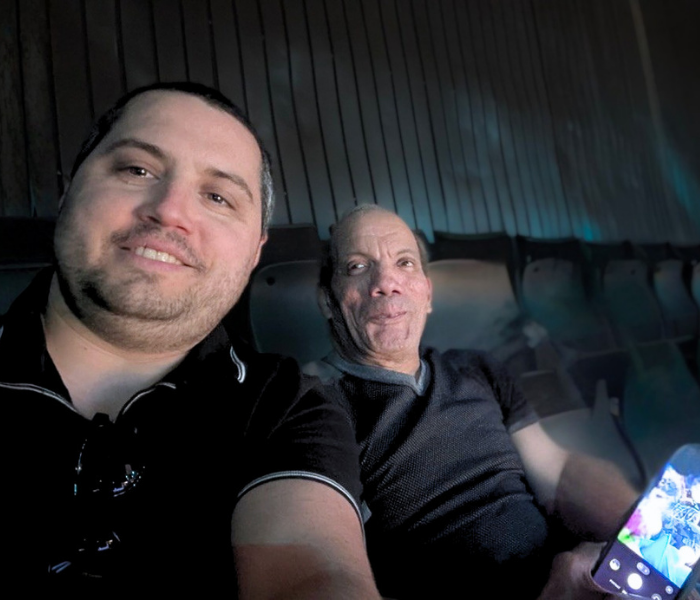
His life mirrors that transformation.
Sturm began in a group home in Queens, moved through supported living in Hicksville and Port Washington, and eventually achieved a goal that once felt out of reach: living independently. Today, he lives in his own apartment in Farmingdale.
With support from YAI, he secured long-term employment as a janitor, built financial skills, and developed routines that allow him to manage his day-to-day life with confidence.
Yet despite decades of progress, access to these opportunities is far from universal. Fewer than 1 in 5 people with I/DD receive the paid supports needed to live in the community, according to the Administration for Community Living. Meanwhile, more than 700,000 people nationwide remain on waiting lists for home and community-based services.
These gaps underscore a critical reality: while the system has evolved, access to meaningful, community-based support remains uneven. For those who do receive it, the outcomes are clear, people are not just living in the community but contributing to it.
Sturm is one of them.
In 1986, he attended the very first Central Park Challenge, a 5K run held in Westchester, organized by YAI. Families came. Friends came. People from other agencies showed up. It felt, Sturm recalled, like a real community event.
"I was nervous at first," he said. "But once I saw everyone else getting involved, I joined in. It felt good to be part of it."
He has attended every Central Park Challenge since.
What began as a fitness event for people with I/DD in Westchester has grown into a 4,000-plus person celebration in the heart of Central Park. It includes live performances, children’s races, accessible games, a 3K walk, and provides a chance for people with I/DD to be fully embraced by their local community. This year marks the 40th anniversary of Central Park Challenge. For many, it’s a celebration. For Sturm, it’s also a symbol of how far the system and society has come.
“It helped me find my community,” he said.
Events like Central Park Challenge represent more than a single day in the park. They are living examples of inclusion in action, spaces where people with disabilities are not separated, but centered; where community is not theoretical, but real.
Today, Sturm’s life is full and self-directed. He has lived independently for nearly nine years, building a routine grounded in choice and confidence. With support from YAI’s community habilitation program, he manages his finances, shops for groceries, and stays active in his community. He is even planning a trip to Las Vegas this summer for his birthday.
“I could never have imagined the kind of life I have today,” he said. “YAI has completely changed my life for the better.”
This May 30, Sturm will return to Central Park Challenge for the 40th time—this year at the information booth, welcoming others as they arrive. He’ll watch families gather, friends reconnect, and first-time participants take it all in. Somewhere in that crowd will be someone just beginning their own journey—nervous, uncertain, and searching for where they belong.
Sturm knows that feeling.
And his story is proof that, with the right support and a community that shows up, belonging can grow into something more: a life defined not by limits, but by possibility.