

For years, Morgan Blissitt talked about getting in shape.
She always had the desire to lose weight but didn't see a clear path forward.
Blissitt, 46, is a YAI resident in the Bronx, where she has lived since her early twenties. She has autism and an intellectual disability, and like many people, she loves food — especially particular foods, prepared in particular ways. Change didn't come easily for her. But three years ago, something shifted. Today, she is 50 pounds lighter, works out regularly, and describes her mood in the simplest terms possible.
"Very good mood," she said. "Very, very good mood."
Her story matters well beyond her household walls. People with intellectual and developmental disabilities (I/DD) face significantly higher rates of obesity than the general population — adolescents with autism and Down syndrome are three times more likely to be obese than their peers, and research published in Health Affairs Scholar in April 2025 found that adults with I/DD reported poorer health than those without functional limitations, particularly in recent years. For many in the community, lasting health change remains out of reach, often because programs aren't built around who they are. Blissitt's journey shows what becomes possible when they are.
Bridget Butler, a Behavioral Intervention Specialist who has worked with Blissitt for nearly five years, remembers noticing the stationary bike in her room when she first arrived. Blissitt had owned it for a while. She just wasn't using it.
"She's always been active in some ways and likes going for walks and going to her program," Butler said. "But the consistent exercise piece hadn't clicked yet."
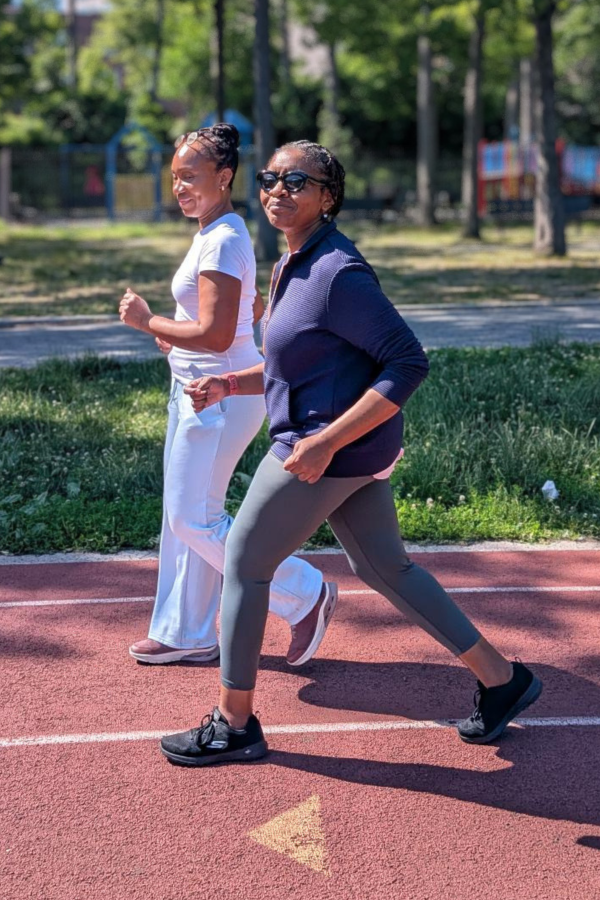
Then it did. Blissitt started riding every day, an hour at a time, often watching her shows while she pedaled, water bottle nearby. From there, she built out a full regimen: sit-ups, crunches, a punching bag, light weights she recently added. She walks outside in dedicated "walking clothes and walking sneakers."
"I like working out because it makes me happy," Blissitt said. "I work out for an hour every day at least."
The harder change was food. For someone with autism whose comfort lies in consistency and familiar routines, shifting those preferences was no small ask. So rather than take foods away, Butler and the staff at the residence worked with Blissitt to find balance. If she wanted chicken nuggets, the conversation became about portions and adding healthier choices alongside the foods she loved.
The approach centered on giving Blissitt choices and making her part of the decision-making process.
"We want to catch her proactively and offer her different ideas of what she can eat," Butler said. "It's helping her think about things before she's already made up her mind."
With that support, and help from her mother on meal planning, Blissitt began trying new foods and making healthier choices more consistently. Snacking, once her biggest hurdle, has seen the clearest turnaround: she now reaches for yogurt, apples, grapes, and tangerines instead of what she used to overeat. Her meals today often include chicken breast, broccoli, rice, and fruit. She mentions, unprompted and with quiet pride, that she drinks water.
The 50 pounds are real, and they matter. But Butler points just as readily to changes that don't show up on a scale. Blissitt participates in behavioral health therapy and has grown more open, better at handling change and talking things through. The physical journey and the emotional one have run in parallel, each reinforcing the other.
"Movement helps with mental health," Butler said. "Her mood is significantly better, and exercise can absolutely be connected to that."
Butler doesn't frame Blissitt's transformation as exceptional. She frames it as what becomes possible when support systems actually listen. "A one-size-fits-all health approach doesn't work for anyone," she said. "You have to find movement someone enjoys, that's sustainable. The same goes for food. Healthy eating doesn't have to mean eating things someone doesn't like."
For a population researchers consistently identify as among the most underserved in public health, that principle is still far from standard practice. What YAI gave Blissitt was a framework that worked for her, not one she was expected to fit.
That philosophy now extends beyond Blissitt’s residence. YAI recognizes that health is about more than physical outcomes and is working to expand opportunities for people with I/DD to find activities that support their overall well-being. Through a new partnership with Special Olympics and Stony Brook University, YAI is preparing to bring recreational sports opportunities to every region it serves, creating more ways for people to discover movement, build confidence, and find their own version of what Blissitt found on that bike.
It had been sitting there all along. All it took was the right support to finally get on.