

When David Levine started as a sales associate at the Gap on July 11, 1996, he didn’t know how to run the register. He learned quickly, and this past July, he marked 30 years with the company. As of this fall, Latasha Hunter has worked 25 years at the Bronx Zoo. Together, they represent 55 years of showing up and getting the job done.
“If you’re determined and you put your mind to it, you can do anything,” Levine said.
Their stories arrive at a moment of change. On September 21, 2026, a new Department of Labor rule eliminated the federal contractor employment goal for people with disabilities, which had been set at 7 percent. Federal contractors must still follow anti-discrimination rules and provide reasonable accommodations, but the benchmark that encouraged employers to actively hire and support workers with disabilities is gone.
At YAI, the message is that the benchmark may be gone, but the need hasn’t changed.
According to the National Core Indicators’ 2023-24 survey, just 17 percent of adults with intellectual and developmental disabilities (I/DD) who use state-funded services have a paid job in the community. Of the remaining 83 percent, 45 percent say they want one. Against those numbers, careers measured in decades are rare.
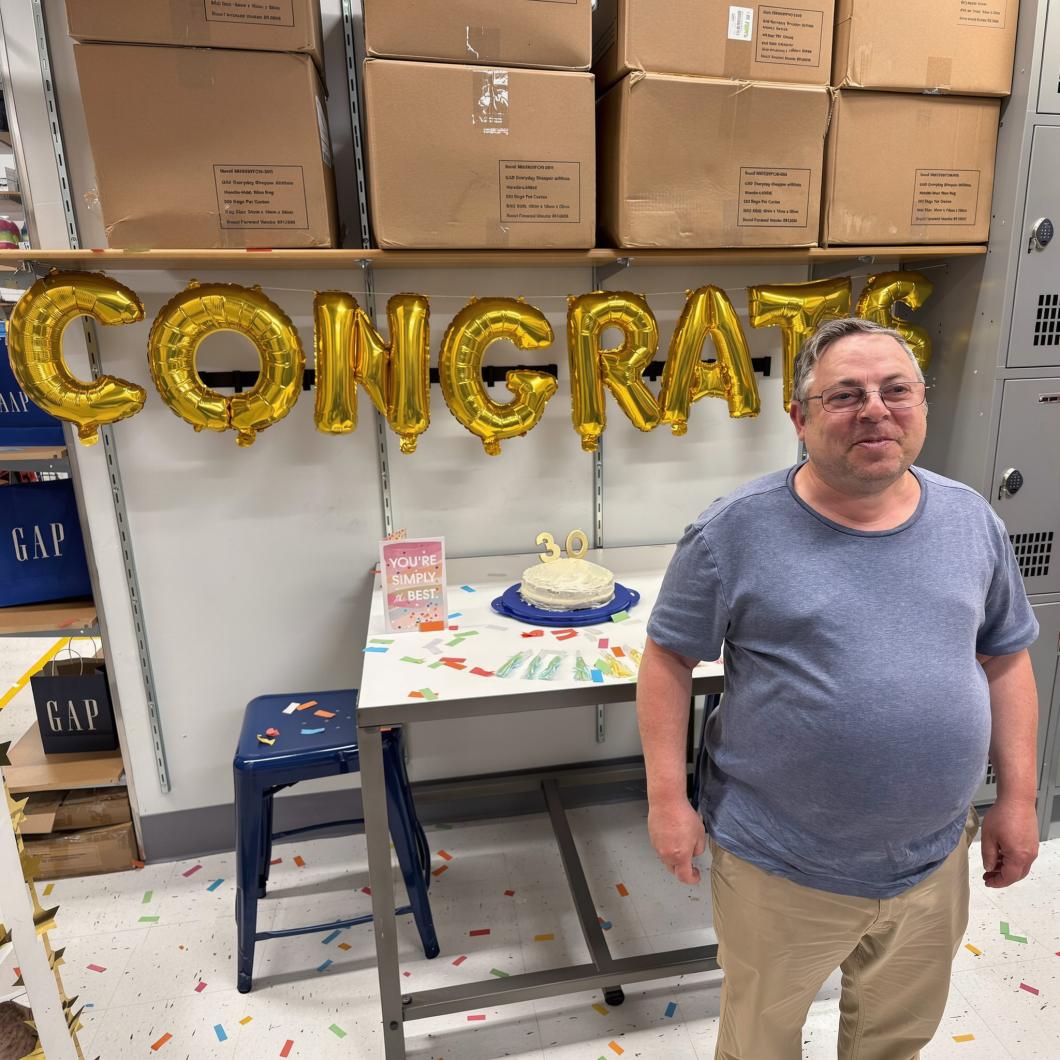
At the Gap’s Roosevelt Field Mall location in Garden City, Long Island, Levine, 57, works 30 to 33 hours a week. He is still a sales associate, but the job is not the one he started with. He has mastered the store’s point-of-sale system and is now the person new coworkers turn to for help with registers and refunds. He regularly signs customers up for Gap credit cards, earns frequent compliments for his customer service, has adapted to a long line of managers, and helps tally the store’s weekly and monthly sales.
Stephen Ferraro, the employment training specialist who coaches Levine, meets with him twice a month. These days, the coaching is less about the job and more about providing encouragement and building his flexibility at work., For instance, he reminds Levine that when the register is quiet, his managers want him to step away and help with fitting rooms and returned merchandise.
Hunter’s work at the Bronx Zoo is seasonal. She works Tuesdays and Wednesdays, mostly at the Butterfly Garden and the Bug Carousel, where she checks that guests have the right voucher. When the zoo introduced a barcode system for school groups, replacing paper lists, she picked it up quickly. Each season, she reapplies and completes the required trainings, and her supervisors always want her back.
The job, Hunter said, is as much about people as tickets. “I’m proud of the relationships I’ve built with my coworkers and the excellent customer service I provide,” she said. “My coworkers have always made me feel included, valued and part of the team. The Bronx Zoo feels like a second home to me.”
After 25 years, patience is the skill she values most. “Working with so many different visitors has taught me how to remain calm, patient and professional,” she said. She has also learned to advocate for herself when she needs support.
Bianca Bonner, assistant supervisor of employment services in the Bronx, started as Hunter’s job coach. She said Hunter has not missed a day in the two years they’ve worked together, unless the zoo sent her home because of bad weather. When a guest pushes back on a fee, Hunter calmly explains it. “She’s not afraid,” Bonner said. “She speaks up.”
Both coaches describe their role the same way: help where it’s needed, then step back. When the zoo’s payroll system added two-step verification, Bonner and Hunter worked through it together. Now Hunter pulls up her pay stub on her phone independently. That kind of support is not a given. In the National Core Indicators’ 2023–24 survey, only about one-third of adults with I/DD who wanted a job had an employment goal included in their service plan.
For Ferraro, the case for hiring people with disabilities comes down to staying power. Employers gain a dedicated employee, he said, and a job coach to help that person learn new tasks. Customers notice, too, and think more highly of companies with a diverse workforce.
For Bonner, it’s about inclusion. “You might need help in one area, but in another you excel,” she said.
Hunter is clear about what employers get. “They know I can get the job done,” she said. “They can always depend on me. I’m always responsible and on time.”